Showing posts with label new release. Show all posts

Tuesday, February 23, 2010

Nvidia Ion 2 slower than the original Ion?

A
cer last week announced its Aspire One 532G netbook as the first to carry Nvidia's forthcoming Ion 2, but few details have been revealed about the next-gen graphics chip. Some folks at NetbookNews recently got their hands on the Aspire One 532G at Mobile World Congress, and they managed to sneak in a 3DMark 03 graphics benchmark.

While the results aren't conclusive, the Ion 2 actually performed worse than the original. The Aspire One 532G scored 3,049 3DMarks, which compares to 3,593 3DMarks for the Ion LE-equipped Samsung N510. Netbook Choice speculates that this may show issues Nvidia has faced with Intel's Pine Trail architecture.
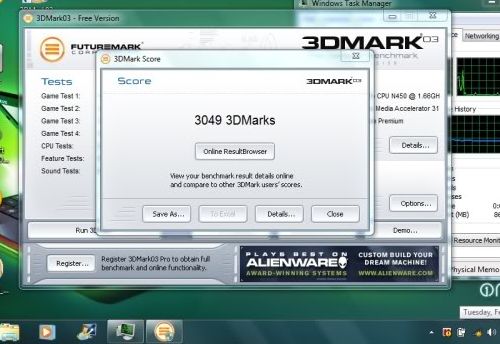


Since the GPU-maker isn't allowed to create chipsets around DMI, the Ion 2 likely uses PCIe to interface with Pine Trail. It's suggested that limited bandwidth over PCIe could be the culprit -- at least partially -- but there are other explanations. For instance, Acer and Nvida might have crippled the system to keep it stable while being shown at MWC. Unpolished drivers could also be responsible.

An Nvidia representative quickly responded to the unflattering benchmark results: "I can’t vouch for the accuracy of the benchmark that was performed at that show. I believe the units there were pre-release systems. We haven’t provided performance data yet for the public, we’ll have more details coming in early March."

Read more...
Lenovo intros six new Think-branded business computers

L
enovo has announced it will ship six new Think-branded business-minded computers
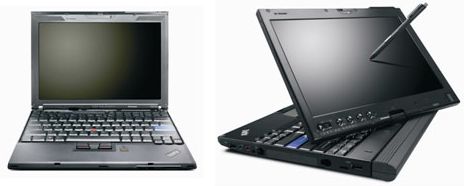
next month. The company flaunts its ThinkPad X201 as the industry's fastest ultraportable laptop, the X201s as the thinnest and lightest in its product line, the X201t is the "smart tablet for business users," and the W701 and W701ds mobile workstations are the most powerful ThinkPads.


The ThinkPad X201, X201s, and X201t all have 12.1-inch displays (capacitive multitouch for the tablet), an Intel Core i5 or i7 processor, Intel graphics, up to 8GB of RAM, have a range of disk and solid-state storage options, and run Windows XP or 7. The X201 and X201s offer up to 11 and 12 hours of battery life, and both weigh less than three pounds. In order of mention, prices start at $1,199, $1,599, and $1,549.

The ThinkPad W701 and W701ds workstations sport 17-inch screens, with the latter also packing a 10.6-inch display. Apart from the dual-screen, the machines are seemingly identical. Both carry either a Core i7-920 or i7-820QM processor, an Nvidia Quadro FX 3800M or FX2800M GPU, up to 16GB of RAM, an HDD or SSD, Windows XP or 7, and weigh around nine pounds. Prices start at $2,199 and $3,799. 


Lenovo says its ThinkServer TS200v "goes big on features and performance" with prices kicking off under $500. It can be configured with a handful of Core i3 and i5 processors, but scales all the way down to the Pentium G6950 and Celeron G1101. Other features include a DVD drive, room for two 3.5-inch drives in RAID 0/1, gigabit Ethernet, PCI as well as PCIe X1 and x16 slots, ten USB ports, and VGA-out.

Read more...

Sunday, February 21, 2010

Weekend Open Forum: What's your preferred mobile phone platform and handset?

I
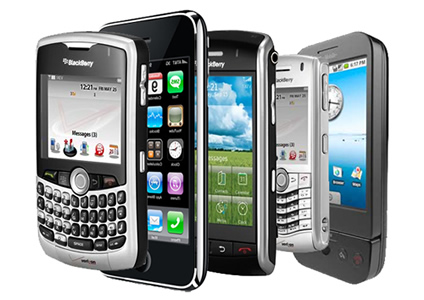
n the past three years we've seen a number of new smartphone operating systems burst onto the scene. From Apple's wildly successful iPhone OS, to Google's increasingly popular Android and Palm's praised yet still floundering WebOS -- to name a few. Microsoft is no stranger to the market either, but just recently the company took a radical departure from its previous business-centered strategy and unveiled what looks to be a potentially solid contender in the consumer space: the Windows Phone 7 Series.

All of them are characterized for powering a new generation of touch-driven, fast and feature-rich devices that evermore seem to be turning into pocket-sized computers. The fact that three of the most significant companies in desktop computing -- Apple, Google and Microsoft -- now stand to occupy the same positions in mobile is a clear indication of where the industry is going.


Others like Nokia and RIM have arguably been a bit slower to adapt to the latest trends -- or have preferred to focus their efforts on a particular niche -- but still command an undeniable large portion of the cell phone market. Like them there are also a number of big-name industry players peddling their own platforms and hardware, including Samsung, Sony Ericsson, Motorola, Toshiba, HTC and LG Electronics.

In this edition of our Weekend Open Forum we want to know what kind of device you are currently using. Have you jumped into the smartphone and mobile app craze? Are you more of the business user type? Or perhaps you are comfortable with anything that can make a simple phone call? Feel free to share what you love or hate about your current hardware and mobile platform, as well as any plans for your next purchase.

Read more...

Ubisoft's new DRM more annoying than expected

Y
ou may recall Ubisoft's recent decision to axe StarForce DRM in favor of a new online platform. The company's online services platform sounded similar to Steam, letting users play from multiple machines without discs -- but it wasn't perfect. The platform required a permanent Internet connection. Needless to say, gamers weren't happy.

Despite disapproval, Ubisoft is pressing on with the technology. CVG has received Assassin's Creed II and Settlers VII for review, and both are laced with the new mechanism. Granted, being forced to have your machine online is annoying, but the flaws run a bit deeper.

CVG says that if you're disconnected while playing, you're kicked from the game and all progress from the last checkpoint or save is lost. Naturally, this occurs whether your cat unplugs your router, your ISP has issues, or if Ubisoft's servers crash.


Piracy may not be the driving force behind Ubisoft's new platform, but the company has said any initiative that decreases illegal downloads will allow it to pour more cash into the creation and expansion of intellectual properties.

What about the resources wasted in an attempt to prevent the inevitable? We all know that Assassin's Creed II and other popular titles will hit torrent sites around the same time as retail shelves. Resistance is futile.

Shouldn't companies focus more on rewarding paying customers rather than punishing them for the deeds of a few bad apples?

Read more...

Friday, October 16, 2009

Gaming Sony announces 250GB PlayStation 3, due November 3

F
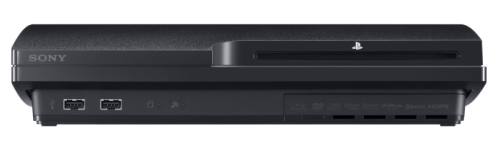
ollowing the successful launch of a slimmer PlayStation 3 model back in September, Sony has announced a beefier 250GB variant of the console is due to hit U.S. stores next month priced at $350. Besides upping storage capacity
, the new system will be otherwise identical to the existing 120GB version which sells for $50 less.


The move comes as expected after leaks suggesting a larger-capacity PS3 would arrive sometime in October. Contrary to some rumors, however, for now the 250GB console has not been announced as part of any bundle like we've seen elsewhere -- Japan will be getting a Final Fantasy XIII bundle in December, for example, while customers in Europe can now get the new 250GB model packed alongside Naughty Dog's Uncharted 2. Hopefully Sony will announce a similar deal for U.S. customers in time for the holiday season.

Those who recently bought the 120GB version, and PS3 owners in general, might be interested to know that you can also swap out the 2.5-inch SATA drive yourself without voiding the warranty on your PlayStation 3. A quick search online shows that a 320GB hard disk drive can be had for around $56 and a 400GB model for $70, so you'll have to pay a little a premium assuming you even need more storage capacity.

Read more...

Monday, October 5, 2009

AVG touts faster scans and new features with AVG 9.0


H
ot on the heels of Microsoft's Security Essentials launch last week, AVG Technologies is unveiling a major update to its free and paid internet security products which the company claims brings much faster scan times as well as a number of under-the-hood improvements.

Responding to customer feedback the security firm has reportedly put special focus on improving the user experience and ease of use. As a result, version 9.0 is said to be "up to 50 percent" faster than its predecessor, thanks to more sophisticated caching techniques and memory use. Boot times have also been reduced by around 10 to 15 percent and overall the installation process on the full-fledged suite has been shortened from 22 screens to 11.

In addition to the anti-phishing protection offered through LinkScanner, AVG 9.0 now also includes additional protection against identity theft in the physical world (for US customers only) with the AVG Identity Theft Recovery Unit (ITRU). Meanwhile, firewall enhancements include a complete redesign and a new cloud-based white listing database to reduce the amount of user input required to secure a PC.

Both AVG Internet Security 9 and AVG Anti-Virus are available now for a one-year license of $49.99 and $34.99, respectively. The main difference between the two is that AVG Anti-Virus lacks the firewall, identity protection, anti-spam, and system tools that come in AVG Internet Security. As always, a cut-down free version will also be available but starting from mid-October.

Read more...

Tuesday, September 8, 2009

Intel Core i5 750 Processor Review

I
t has been 10 months since Intel unleashed its Nehalem architecture and we showed you the Core i7 920, 940 and 965 Extreme Edition. Not much has changed in the high-end sector during this timeframe, as Core i7 processors are still brutally fast and equally expensive.

The new Intel Core i5 750 is the first release in a series of processors based on a mainstream version of the Core i7 platform. It is a quad-core part based on the "Lynnfield" architecture, fabricated using a 45nm process and utilizing the new LGA1156 platform. The Core i5 750 is set to cost just $199, it will operate at a healthy 2.66GHz and feature a whopping 8MB L3 cache, but no Hyper-Threading support will be present.


In our review we will go into more detail about Intel's reworked desktop CPU line-up, the new P55 chipset (LGA1156), and our usual load of benchmarks comparing this new processor against current Core 2 Quad offerings, the Core i7 920 and the AMD Athlon II X4 965.

Read more...

Firefox 3.6 to arrive this year, 4.0 in late 2010

A
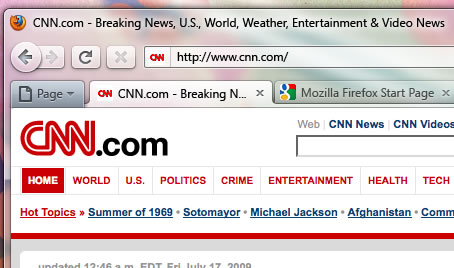
lthough Mozilla released Firefox version 3.5 not long ago, the team has been showing mockups of future designs. In addition to embracing glass on Windows Vista and 7, future versions will have reorganized interfaces. Previews of Firefox 4.0 suggest that it may have a combined and relocated reload, stop and go buttons, as well as a tab sidebar, tabs on top, and many other UI tweaks -- none of which are set in stone.


Mozilla is now indicating that we may see the launch of Firefox 4.0 next October or November. It has also reportedly updated its roadmap for the release of Firefox 3.6 and 3.7, with the former expected to debut later this year and the latter to arrive in the second quarter of next year. There are also reports that Fennec 1.0 -- the mobile version of Firefox -- will be made available at the same time as Firefox 3.6, and Fennec 2.0 with Firefox 4.0.

If the suspense is killing you, fear not; pre-release builds are available. Feel free to download Firefox 3.6 and 3.7 at your own risk.

Read more...

Worm attacks WordPress blog software

S
erving as a stern reminder of why it's important to keep desktop as well as server software up to date, a new worm can reportedly infect certain versions of the WordPress blog software. WordPress announced the discovery today, saying that a security bug which has already been fixed is now being exploited in the wild.

The worm is able to attack versions of WordPress prior to 2.8.4 and its immediate predecessor. Version 2.8.4 was released in early August to specifically address this flaw, which results in a password reset of WordPress accounts and allows someone to take control of the admin account. Doing so would give the person access to further information, as well as the ability to wreak havoc on the blog itself.

Though the vulnerability was initially published several weeks ago, this is the first report of malware specifically identifying and trying to exploit it. The WordPress developer is concerned that many servers are still running old versions, which puts them at risk. If you're maintaining a WordPress server that's behind on updates, consider this a heads up.

Read more...

Thursday, September 3, 2009

Philips announces pricey Wireless HDMI solution

C

omputer and gadget lovers like us are no strangers to the rat's nest of hanging cables that usually forms behind our desks. But this isn't the only place where electronic components are wired together; more and more our living rooms have morphed into media centers with at least a mid-sized TV, several audio / video components and typically a gaming console.
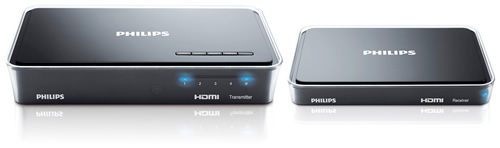
Fortunately there has been some development aimed at wirelessly connecting HDTVs to our entertainment setups, particularly with Wireless HDMI and WirelessHD. The bad news: it's expensive and not entirely practical for now. Nevertheless, looking to gain an early foothold on the market, Philips has announced a pair of Wireless HDMI boxes which aim to let users connect audio and video devices to their TVs without all the clutter.


The Wireless HDTV link will let you relocate or even hide your components up to 20 meters away while still sending a 1080p/30 HD signal. But getting rid of wires will come at the cost of adding two separate boxes; the image source (Blu-ray player, for example) is connected to a transmitter box and the TV or projector is connected to a smaller receiver box. 
This setup makes more sense if the two devices are not located next to each other, but eventually Wireless HDMI technology will be built into home electronic products -- thus obviating the need for transmitter and receiver boxes. Phillips' solution includes two digital HDMI connections, two component connections, and a hefty 600 Euro ($850) price tag.

Read more...

OnLive cloud-based gaming service now in public beta

O
nLive's cloud-based gaming service has just rolled into open beta, so if you've been patiently awaiting its release, now might be a great time to test it out. According to OnLive's official blog, to gain entry to the public beta you must sign up on their site.

After signing up, you will have to provide general information about your ISP, computer specs and your location. OnLive uses this information to organize beta testers into groups. If you fit into a particular test group, OnLive will email you and request that you run a detailed performance test on your network connection and system configuration. They will review that information and may choose your setup to install the OnLive browser plug-in.


For the unfamiliar, OnLive is an on-demand video game service which takes the computational load of running today's high end games off of your PC, and places it onto their servers. Games are synchronized, rendered, and stored remotely and delivered via broadband Internet. The service allows you to play games on low-end systems running Windows XP, Vista (and presumably 7), as well as any Intel-based Mac with OS X.

You're probably thinking that the service will host the typical lame browser-based games, but it has numerous big names on-board, including Electronic Arts, Take-Two, Ubisoft, Epic Games, Atari, Codemasters, THQ, Warner Bros., 2D Boy and Eidos Interactive. It has a library of top-end games you would expect to see on the shelves of your local GameStop.


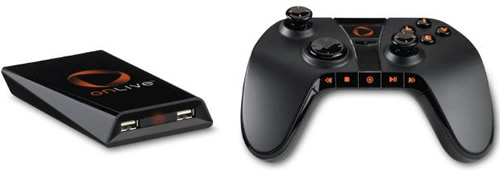
OnLive will also be selling a router-sized "MicroConsole" which has USB, HDMI, and Ethernet ports. By hooking the MicroConsole up to your TV and broadband line, you can play OnLive games sans computer. The service will require you to pay, but OnLive CEO Steve Perlman believes the console, controller, and subscription fee will be cheaper than the cheapest of consoles.

Read more...

Wednesday, September 2, 2009

Sony announces 11.1" ultraportable VAIO X notebook

S
Sony has introduced the new ultra-thin VAIO X laptop series today in Berlin at the IFA 2009 electronics event. There aren't too many details available yet, but based on reports from outfits attending the gathering, it's a premium ultra-portable with a non-glossy 11.1" display, a carbon fiber .55" chassis, and weighs a mere 1.5lbs.


According to Engadget (who is on site), the system will tout an "all-day" battery life, and will set a new standard for stamina. There is nothing official about what will power the VAIO X at launch, but Engadget is reporting that they hear it packs an Intel Atom. That said, nothing is locked in and there's no telling if CULV-based models will be available.


After watching a video shot by NetbookNews, I have to admit that while attractive, the model they handled was looking a little fragile (watch the display as it's opened). Sony is expected to announce an official spec sheet next month, and the VAIO X will hit stores about a week after Windows 7's October 22 launch. Does anyone want to take a stab at the MSRP?

Read more...

Nokia reveals full specs and price of Booklet 3G

E
arly last week, Nokia announced its much-expected entry into the netbook space with the Booklet 3G. The company hyped the device's 3G connectivity, lightweight design and alleged 12 hours of battery life; but for the most part hardware details were kept under wraps. Now, with its Nokia World Conference currently underway in Germany, the Finnish manufacturer has shed some additional light on its netbook.

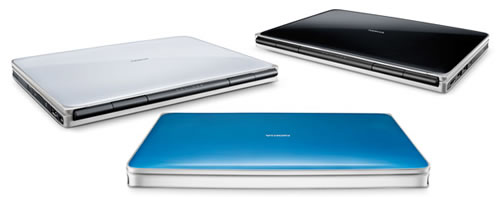
The Booklet 3G is constructed from a single piece of machined aluminum, weighs 2.75 pounds, and is just 0.78 inches thick. Color options at launch will be black, ice (white) and azure (blue). The device has a 10-inch screen with a 1280x720 pixel resolution, and can connect to bigger displays using an HDMI port, according to Nokia. It also sports an almost unheard of 16-cell user-removable battery to accomplish the promised half-day runtime.


Under the hood there is an Intel Atom Z530 running at 1.6 GHz and Poulsbo US15W chipset with a fanless design, as well as 1GB of memory and a 120GB hard drive (1.8-inch, 4200RPM). As expected of a Nokia device, there are plenty connectivity options, including Wi-Fi and 3G/HSPA cellular data network access thanks to a modem and hot-swappable SIM card slot. Other specs include a 1.3-megapixel webcam with integrated microphone, 3 USB ports, Bluetooth, assisted GPS, SD card reader and even an accelerometer.

On the software side, the netbook will come pre-loaded with Microsoft's Windows 7 (Starter, Home Premium or Professional editions) and Nokia services like Ovi Suite 2.0, Nokia Music for PC and Ovi Maps. The Nokia Booklet 3G will retail for 570 Euros (about $810) in Q4 2009, which seems quite pricey for a netbook, but Nokia is expecting the device to be heavily subsidized by phone carriers globally.

Read more...

Tuesday, September 1, 2009

Windows Mobile 6.5 phones to arrive on October 6

P
hones running Microsoft's new Windows Mobile 6.5 operating system will hit the market in exactly five weeks, according to a recent press release. The October 6 launch will mark the debut of the new "Windows Phone" brand, along with the new My Phone synchronization service and the Windows Marketplace for Mobile, Microsoft's attempt to rival Apple's App Store for the iPhone.

The company has not specified which handsets will be available on launch date, but said HP, HTC, LG Electronics, Samsung, and Toshiba are all committed to the OS. The first phone offerings in the U.S. will be on carriers AT&T, Sprint and Verizon, as well as Bell Mobility and TELUS. Devices will also debut on Orange, Deutsche Telekom AG and Vodafone in Europe; and several other carriers in Asia Pacific and Latin America.

With everyone trying to duplicate the iPhone's experience these days, it's easy to forget Windows Mobile is still the third-most used system behind Symbian and RIM's BlackBerry platform. That said, they are facing increased pressure from Apple's iPhone, Google's Android, and Palm's webOS; and it seems to me that this relatively minor update which touts document editing with Windows Office Mobile and a "redesigned Internet Explorer Mobile browser" among its selling points won't do much to stop the market share bleeding.

The new version also improves the user interface to make it finger-friendly, includes improved notifications and updates from e-mail, text and calendar, as well as an App Store-like hub for software downloads -- although Microsoft hasn't confirmed how many apps will be available for download at launch.

Read more...

Sony to pre-install Chrome browser on Vaio laptops

G
oogle is stepping up its efforts to nab some additional browser market share from leader Internet Explorer and second-placed Firefox. As promised earlier this year, the company has now formalized and revealed an agreement that will see Chrome pre-installed on all Sony Vaio-brand laptops sold in the U.S.

Although specific terms of the deal are not being disclosed, it probably includes some form of search advertising revenue sharing between the two. Google says it is actively pursuing other manufacturers to try and get its browser included on more machines. Indeed, OEM deals may be a key tool in the next generation of browser wars -- and Google is one of the few companies with the financial strength to pick off Microsoft.

The company even has plans to develop its own operating system, which is aimed primarily at low-power machines and netbooks, and will act as an access point for its web-based services.

The deal is not expected to include European markets. With the advent of Windows 7, Microsoft has already announced plans to introduce a web browser ballot screen for all current Windows versions in that region, giving users a choice of which software to use. Nevertheless, the move marks an important development for Chrome a year after it was first launched. Currently, Google's browser has around 30 million active users or around 2-3 percent of the global market, making it the fourth most-popular browser after Apple's Safari.

Read more...

Opera 10 complete, waiting to be downloaded

A
s expected, Opera has finally released the completed tenth version of their browser. Opera 10 delivers a revamped interface, a "turbo mode" for those with slower connections, automatic updates and more. Those who are using the release candidate build rolled out a week back may not notice a dramatic difference; the company only lists a few minor changes.


The newest Opera build boasts a 40% speed increase when running web applications (Gmail for instance). Opera Mail has seen numerous improvements and an inline spellchecker has been implemented. Other additions include resizable thumbnail tabs, and Speed Dial has been given personalization features. If you're one of the many who have been awaiting the arrival of Opera 10, grab your download for Windows here.

Read more...

Monday, August 31, 2009

Microsoft Office Build 4417 leaked

 A
s usual, when Microsoft has a new operating system or productivity suite on the assembly line, the public domain has a front seat show. Microsoft Office 2010 Build 4417 has reportedly hit the Web with some minor tweaks and improved stability.

According to Neowin, the most noteworthy change to Build 4417 is that Redmond has fine-tuned and polished the Back-Stage view feature. The latest leak packs a new upload center to store and share documents online, a new activation system, and updated icons. Users are reporting that the uninstall issues of a previously leaked Mondo build have been corrected, and the current version can be uninstalled.


Microsoft Office 2010 first leaked to torrent sites back in May, and Microsoft pushed out a technical preview on July 13. I have no doubt there will be many more unofficial builds to come. If you're going to partake in that scene, be careful of shady sources -- it's not uncommon for these leaks to be laced with malware.

Read more...

Sunday, August 30, 2009

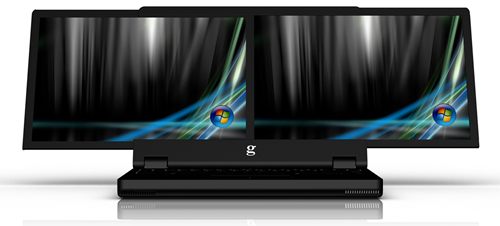
gScreen shows off dual-display laptop, Spacebook

U
Using a laptop has distinct advantages over desktops, most prominently in the mobility department. To gain that boost in portability, though, sacrifices must be made. As a whole, laptops lack the computing muscle offered by their clunky counterparts. That shows in more areas than one - not least in precious screen real estate.

Acknowledging this, a little-known company named gScreen has earned a seat in the limelight with its dual-display-packing notebook. Called "Spacebook," gScreen is working on models that house two 13, 15.4, 16, or 17-inch LED-backlit LCD displays. With a specifically tailored sliding mechanism, the Spacebook's secondary display can be slipped out when needed, and tucked away when not.

In an interview with Gizmodo, gScreen said the Spacebook's specifications will include an Intel Core 2 Duo, 4GB of RAM, an Nvidia GeForce GF900M, a 7200RPM HDD, DVD drive, six or nine-cell battery and Windows 7. The company's website has more details, listing a Core 2 Duo P8400, 4GB DDR2 RAM, 320GB 7200RPM HDD, 512MB Nvidia GeForce 9800M GT or Quadro FX 1700M, and VGA/HDMI-out.


Given the slightly dated specifications, I assume the Spacebook's hardware will be revamped in the models to come. As attractive as a laptop with two displays may be, the complete package probably weighs in excess of 12lbs, not to mention the elevated power consumption. Just something to keep in mind before you plunk down your hard earned dollars.

The company is pressing for December 2009 launch -- probably to snag a few holiday sales -- and plans to have the first units sold via Amazon. Although there is no official price established, gScreen is reportedly trying to keep it below $3,000.

Read more...

Friday, August 28, 2009

Apple discontinues all iPod SKUs, rumors of refresh surface

T
he iPod has greatly assisted Apple in maintaining their MP3 player market dominance. As it stands, "MP3 player" is nearly synonymous with iPod - much to Microsoft's chagrin. That doesn't mean Apple has been resting on their laurels, even if it seems that way to resellers. Numerous resellers are apparently concerned over a drop in stock volume, reporting low quantities of iPods available for resale.

That's just the tip of the iceberg though, with Cupertino announcing even more harrowing news. The company has discontinued all existing iPod SKUs, demonstrating that it is preparing to cease manufacture (and hence sales) of every existing iPod model. Is the iPod becoming stale? Perhaps, depending on your point of view - but it is still a blisteringly successful device.

Why would Apple put a stop to all their existing SKUs? Rumor has it that Apple is planning to refresh iPods across the board. This move seems to coincide with the widespread anticipation of a rumored September event. Though it's obvious they are planning something big for the iPod, Apple is tight-lipped as usual.

In the meantime, the halt may indicate a temporary shortage of iPods as existing supplies run dry. We'll post more as we hear official news from Apple.

Read more...

Thursday, August 27, 2009

Nokia unveils Linux-based smartphone, N900

I

n addition to elbowing its way into the netbook scene, Nokia has unveiled a new smartphone, the N900. Keeping its Internet Tablet devices close to heart, the company has given life to a tablet-smartphone-Frankenstein. The company sees its new handset as an evolution from its tablets - which, naturally, lacked cellular functionality.
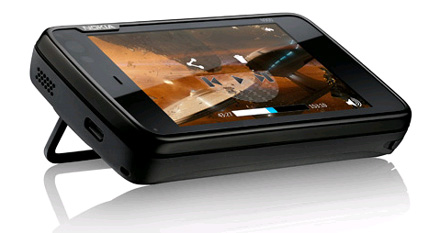
The N900 will run Maemo 5, and feature a 3G cellular connection (WCDMA and HSPA at 900/1700/2100 MHz), a WVGA touchscreen display and hardware QWERTY keyboard. It will pack an ARM Cortex-A8 processor, 1 GB of RAM, 32GB of storage (expandable up to 48GB via microSD), and OpenGL ES 2.0 graphics acceleration. Nokia's new smartphone will be capable of multitasking, it will run a browser made by Mozilla, and will support Adobe Flash 9.4.

Opinions of the N900 are mixed. Most seem to believe it will be a niche product only purchased by early adopters. Research firm CCS Insight considers the device as an experiment, and said, "Its uninspiring design further reflects its experimental nature." They also feel that its appeal will largely lie in its software platform.

Experimental or otherwise, the N900 has quite the feature-set. Nokia's Franken-phone will be available in early October with an asking price of $712 before taxes and subsides. See the Nokia N900 and Maemo 5 in action after the jump.

Read more...

  © Blogger templates ProBlogger Template by Ourblogtemplates.com 2008

Back to TOP